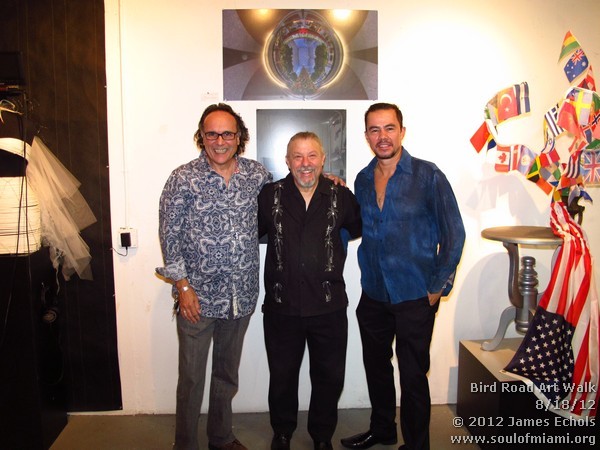
Christian Holstad and Seth Price + Works from the Collection 9/8/12
Christian Holstad and Seth Price + Works from the Collection
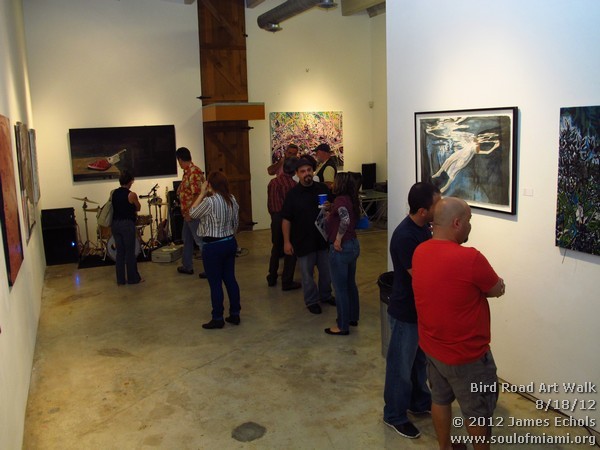
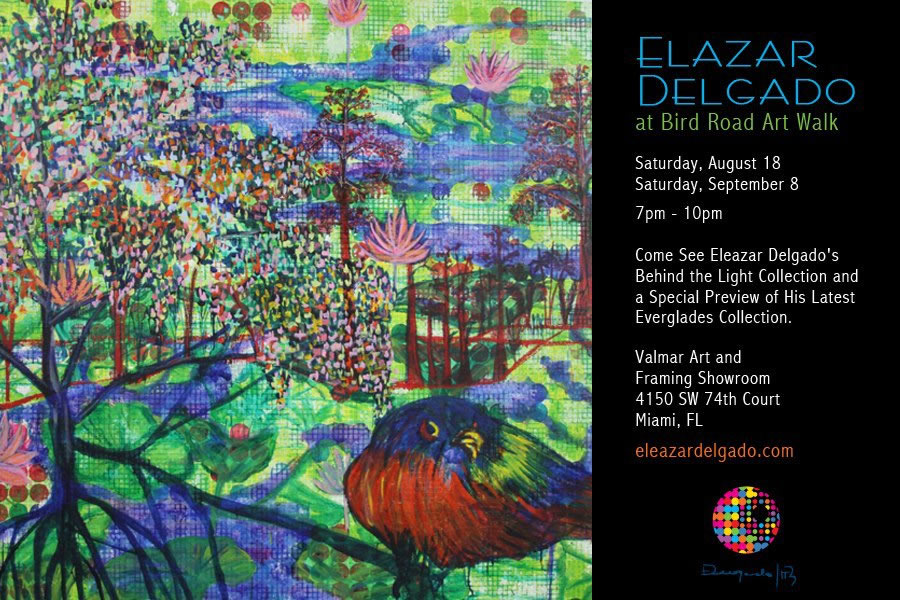
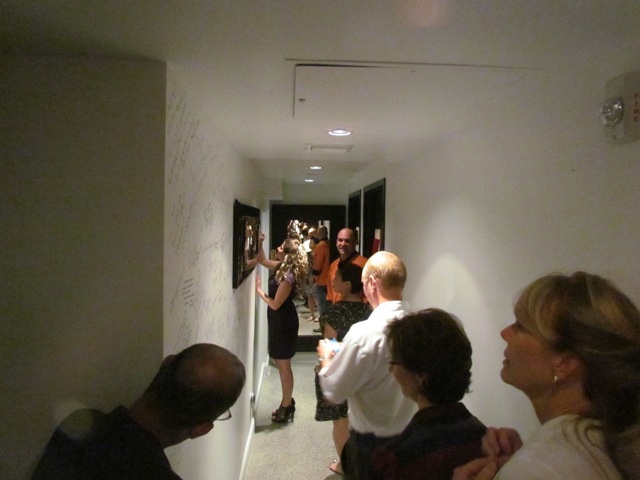
Second Saturday Gallery Walk, September 8, 2012. From 7-10pm  de la Cruz Collection
23 N.E. 41st Street
Miami, FL 33137
The de la Cruz Collection is pleased to announce the opening of an installation in our project room of works by American artist Christian Holstad.
Christian Holstad’s art practice reflects his interests in crafts, hand-made objects and textiles. Holstad’s work shares a "Camp" aesthetic sensibility with references to kitsch. "Camp" was very much part of the 1960’s culture and is often associated with drag queen performers, filmmakers like John Waters (his films Pink Flamingos, Hairspray and Polyester), Andy Warhol and artists like Divine and Liberace.
Holstad’s installation Sleeping Bag from Dignity, 2004, a crotched campfire scene, includes a sleeping bag with an image of Patty Hearst on the pillow, a symbol of American History in the 70’s. Big Drag, 2004, a metallic purple hyena with flamingos is also included in the installation, further referring to disco culture.
It Comes in Waves, 2003, Christian Holstad’s sparkling tinsel curtain, brings back memories of Felix Gonzalez-Torres’ glittering curtains. By inprinting on the curtain Japanese artist Hokusai’s famous early 19th century woodblock print The Wave, Holstad introduces high art on modest materials.
Christian Holstad was born in Anaheim, California 1972.
He lives and works in New York.
The de la Cruz Collection is pleased to announce the opening of an installation of works by American artist Seth Price.
In an interview with Gwen Allen in 2007, Seth Price stated – "I’m interested in the effect of digital technologies, as they reached the marketplace sometime in the 1970s. It does happen to line with my own life span." Like Marcel Broodthaers and Felix Gonzalez-Torres, Seth Price is interested in the importance of the distribution and dispersion of the artwork.
In Digital Video Digital Effect: Spills, 2004, Price alters a homemade video shot by Joan Jonas featuring Richard Serra and Robert Smithson discussing current issues referring to the art market. Price uses electronic ink to abstract and erase the image, however their conversation can be heard. The packaging of the video is an integral part of the work, creating a time capsule, and questioning the obsolescence of technology.
Price’s use of industrial methods is manifested in his vacuum-formed works. In this case, the synthetic rope becomes a "luscious" object even though its just a plastic mold like those used today for packaging and distributing mass-produced goods.
Seth Price was born in East Jerusalem 1973.
He lives and works in New York.




















































































































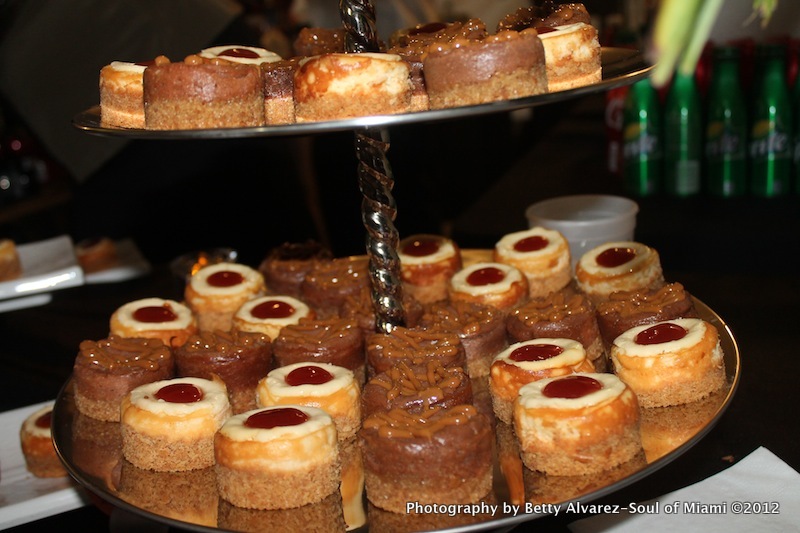

































































 When the words “pastry” and “Miami” come together, the first thought that usually comes to mind for locals and tourists, alike, is Cuban pastry – those little geometric shapes of crispy, lardy, flakiness most famously filled with guava paste and/or cream cheese.  Cuban culture and cuisine have come to be almost synonymous with Miami culture, and apart from the plethora of Cuban bakeries on almost every corner in western Miami, practically every supermarket in South Florida carries pastelitos and croqueticas.  However, after having moved to North Miami Beach and then bouncing around different neighborhoods in the northeastern part of Dade County, I discovered that Cuban pastries are not as prevalent in this part of the Magic City as they might be in Hialeah, Little Havana, Kendall, or Coral Gables.  Whereas Español might be the language of choice in those neighborhoods, Kreyòl is the lingua franca in places like North Miami, North Miami Beach, Miami Shores, and Little Haiti where it’s easier to find a place to grab a box of griot (spicy fried pork chunks) and a Choucoune (champagne cola)  than it is to find a Cuban sandwich and a cafecito.  Haitian culture is very prominent in northeastern Miami, which means that Spanglish phrases widely accepted in other parts of the city are usually met with blank stares (I learned this the hard way), and the chances of finding a fresh guava and cheese pastry can be slim to none.
 Discovering Haitian cuisine is a gastronomic revelation for any true foodie.  While the cuisine is unpretentious and simple, the flavors are bold and spicy, oftentimes quite unique, and demonstrate a very African culinary aesthetic paired with a very French sophistication.  One area in which this cross-cultural fusion of techniques and palates can be experienced almost perfectly is in a Haitian patty, which is an anglicization of the Creole word “pate” (pronounced pah-tey) derived from the French word “patisserie”, which simply means pastry.  In form, it more closely resembles a Cuban pastelito than a Jamaican patty.  Like Cuban pastries, Haitian patties consist of delicate, flakey puff pastry surrounding some sort of filling, but the similarities end there.  The main difference between the two pastries is that while Cuban pastries are best known for their sweet fillings, Haitian patties are almost exclusively savory, and even when comparing  savory pastries from both cuisines, Haitian patties are noticeably spicier and have bolder flavors.  The most typical fillings are ground beef, ground chicken, salted cod (bacalao), smoked herring, and ground turkey.  There is also a difference in the crusts between Cuban pastries and Haitian patties.  While Cuban pastries place value on crispiness and have more brittle crusts that are glazed to complement the usually sweet fillings, Haitian patties go unglazed and place emphasis on producing as many impossibly delicate layers as possible.  Like most pastries, Haitian patties are best when they are fresh out of the oven in the morning, making them an ideal choice for a breakfast on the go, especially if you’re one who prefers something savory for breakfast over something sweet.  There are two main shapes to take into account with Haitian patties that usually denote the two most popular fillings: beef patties (and sometimes chicken) are square while cod patties (and sometimes herring) are triangular.