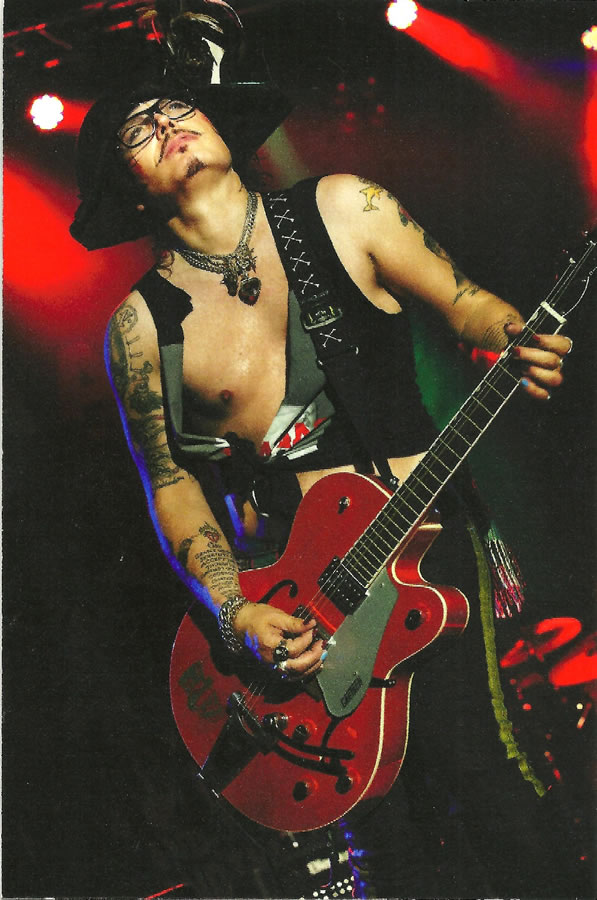
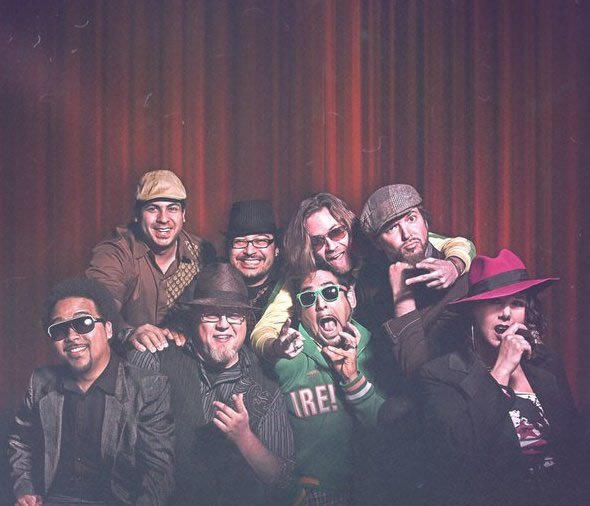
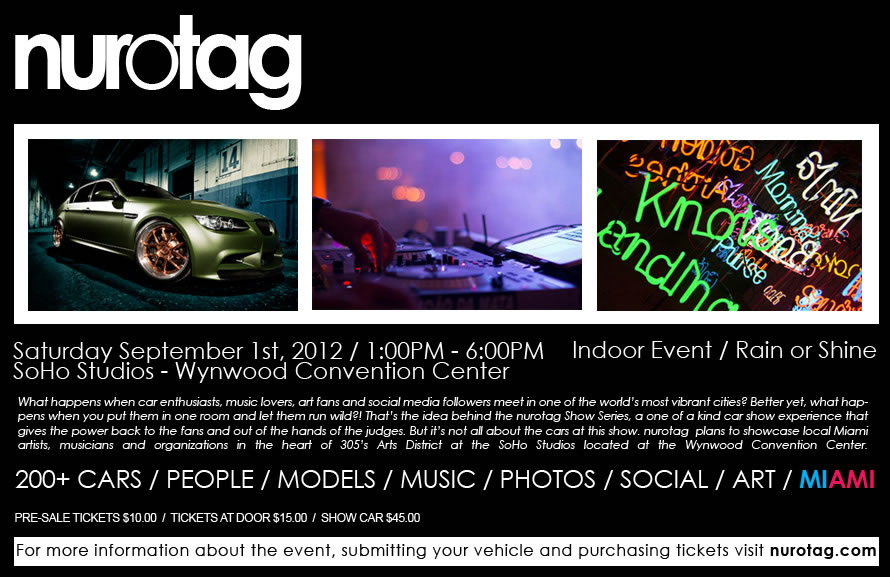
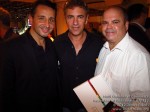
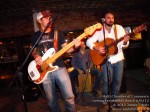
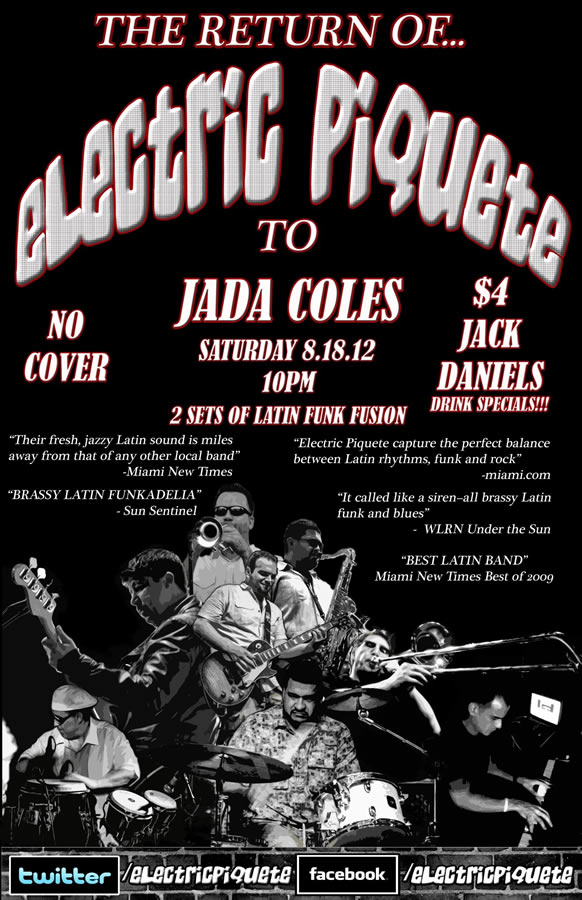
George Clinton and Parliament Funkadelic at Revolution Live 10/25/12
George Clinton and Parliament Funkadelic at Revolution Live
Thursday, October 25, 2012, 9pm
Revolution Live
100 Sw Third Ave.
Ft. Lauderdale, Fl
www.jointherevolution.net
Tickets At The Revolution Live Box Office (No Fees at Revolution Box Office), www.livenation.com and all Ticketmaster Outlets Or Charge By Phone: 800-745-3000
Prices $26.00 – Advance
$28.00 – Day Of Show
General Admission – All Ages
All dates, acts and ticket prices are subject to change without notice. All tickets are subject to applicable taxes, and service and handling charges.
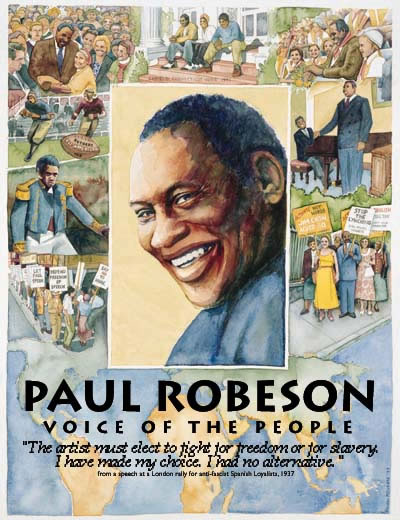
Under the guiding hand of mastermind George Clinton, Parliament/Funkadelic established funk as an heir to and outgrowth of soul. If James Brown is funk’s founding father, Clinton has been its chief architect and tactician. Over the decades, he’s presided over a musical empire that’s included Parliament/Funkadelic, plus numerous offshoots, solo and aggregates. The pioneering work of Parliament/Funkadelic in the Seventies—driven by Clinton’s conceptually inventive mind and the band members’ tight ensemble playing and stretched-out jamming—prefigured everything from rap and hip-hop to techno and alternative. Parliament/Funkadelic virtually defined the melting pot known as funk: a melding of rhythm & blues, jazz, gospel and psychedelic rock. With them, Clinton has purveyed larger-than-life characters and concepts from the stage, culminating in such theatrical milestones as the Mothership, a mock flying saucer from which the black space “aliens†of Clinton’s musical entourage alighted onstage. Though his musical productions have been typified by danceable grooves and driven by a laser-sharp sociological wit, Clinton’s ultimate goal is serious: “I am intent on making the word funk as legitimate as jazz and rock and roll.â€




 When the words “pastry” and “Miami” come together, the first thought that usually comes to mind for locals and tourists, alike, is Cuban pastry – those little geometric shapes of crispy, lardy, flakiness most famously filled with guava paste and/or cream cheese.  Cuban culture and cuisine have come to be almost synonymous with Miami culture, and apart from the plethora of Cuban bakeries on almost every corner in western Miami, practically every supermarket in South Florida carries pastelitos and croqueticas.  However, after having moved to North Miami Beach and then bouncing around different neighborhoods in the northeastern part of Dade County, I discovered that Cuban pastries are not as prevalent in this part of the Magic City as they might be in Hialeah, Little Havana, Kendall, or Coral Gables.  Whereas Español might be the language of choice in those neighborhoods, Kreyòl is the lingua franca in places like North Miami, North Miami Beach, Miami Shores, and Little Haiti where it’s easier to find a place to grab a box of griot (spicy fried pork chunks) and a Choucoune (champagne cola)  than it is to find a Cuban sandwich and a cafecito.  Haitian culture is very prominent in northeastern Miami, which means that Spanglish phrases widely accepted in other parts of the city are usually met with blank stares (I learned this the hard way), and the chances of finding a fresh guava and cheese pastry can be slim to none.
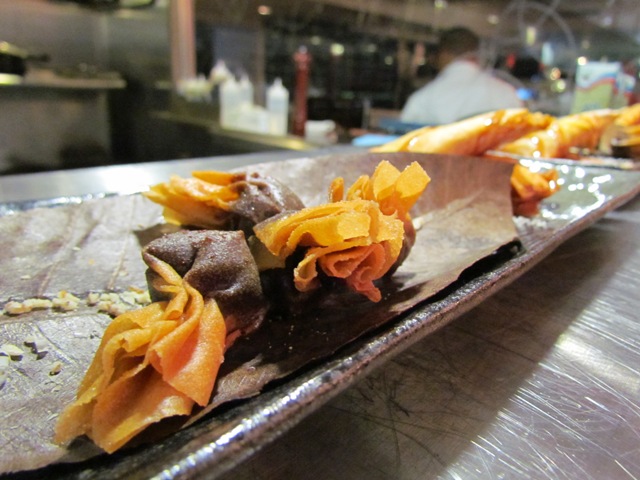
 Discovering Haitian cuisine is a gastronomic revelation for any true foodie.  While the cuisine is unpretentious and simple, the flavors are bold and spicy, oftentimes quite unique, and demonstrate a very African culinary aesthetic paired with a very French sophistication.  One area in which this cross-cultural fusion of techniques and palates can be experienced almost perfectly is in a Haitian patty, which is an anglicization of the Creole word “pate” (pronounced pah-tey) derived from the French word “patisserie”, which simply means pastry.  In form, it more closely resembles a Cuban pastelito than a Jamaican patty.  Like Cuban pastries, Haitian patties consist of delicate, flakey puff pastry surrounding some sort of filling, but the similarities end there.  The main difference between the two pastries is that while Cuban pastries are best known for their sweet fillings, Haitian patties are almost exclusively savory, and even when comparing  savory pastries from both cuisines, Haitian patties are noticeably spicier and have bolder flavors.  The most typical fillings are ground beef, ground chicken, salted cod (bacalao), smoked herring, and ground turkey.  There is also a difference in the crusts between Cuban pastries and Haitian patties.  While Cuban pastries place value on crispiness and have more brittle crusts that are glazed to complement the usually sweet fillings, Haitian patties go unglazed and place emphasis on producing as many impossibly delicate layers as possible.  Like most pastries, Haitian patties are best when they are fresh out of the oven in the morning, making them an ideal choice for a breakfast on the go, especially if you’re one who prefers something savory for breakfast over something sweet.  There are two main shapes to take into account with Haitian patties that usually denote the two most popular fillings: beef patties (and sometimes chicken) are square while cod patties (and sometimes herring) are triangular.